A Brief History of Bella Vista

Bella Vista has been a place people travel to for more than a century. The reason has stayed the same — cool springs, wooded ridges, a break from the lowlands — even as the way they get here has changed three times.
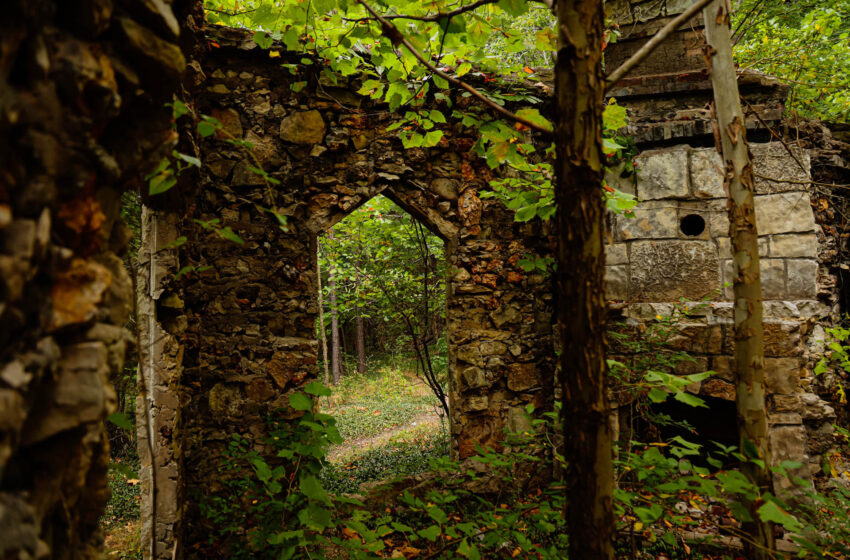
The city you ride through today is the third version of Bella Vista. Each era left something you can still walk up to: a stone ruin, a chapel, a cave gate, a trail. Here’s the arc, and where to find the evidence.
1917: the summer resort
The story starts with water. Sugar Creek was dammed in the early 1900s to form the original Lake Bella Vista, and in 1917 the Linebarger brothers bought the property and built it into a summer resort for families escaping the heat. Rustic lodges, open-air pavilions, and lakeside amenities set hospitality as the landscape’s defining purpose from the beginning.
The resort era peaked in the late 1920s and 30s. The Sunset Hotel, completed in 1929, became the focal point atop the ridge. And Wonderland Cave — a natural cave converted into an underground nightclub — hosted live music and social events through the 1930s, giving the area a regional reputation as a destination retreat.
See it today: The Veterans Wall of Honor stands near the site of the original Lake Bella Vista. Wonderland Cave is gated to protect its ecosystem, but the Bella Vista Historical Museum holds archival material on the cave, the hotel, and the Linebarger years.
1950s–60s: the planned community
The second transformation came mid-century, when John Cooper Sr. redeveloped the area as a planned residential community. The shift was from seasonal resort to year-round living — but recreation stayed the organizing principle. This is the era that built the seven man-made lakes, the golf courses, and the 36,000 acres of common property designed to keep green space between neighborhoods.
The Mildred B. Cooper Memorial Chapel, completed later in this period, is the most enduring expression of that philosophy. E. Fay Jones designed it to rise 50 feet on 15 Gothic arches of steel and glass, so the forest canopy stays part of the room. The idea — build with the terrain rather than over it — is the same idea the trail builders would pick up decades later.
See it today: The chapel is open daily, sunrise to sunset, free of charge, on a wooded ridge above Lake Norwood. Every lake and golf course in town dates from this era.
2007: the city, and the trails
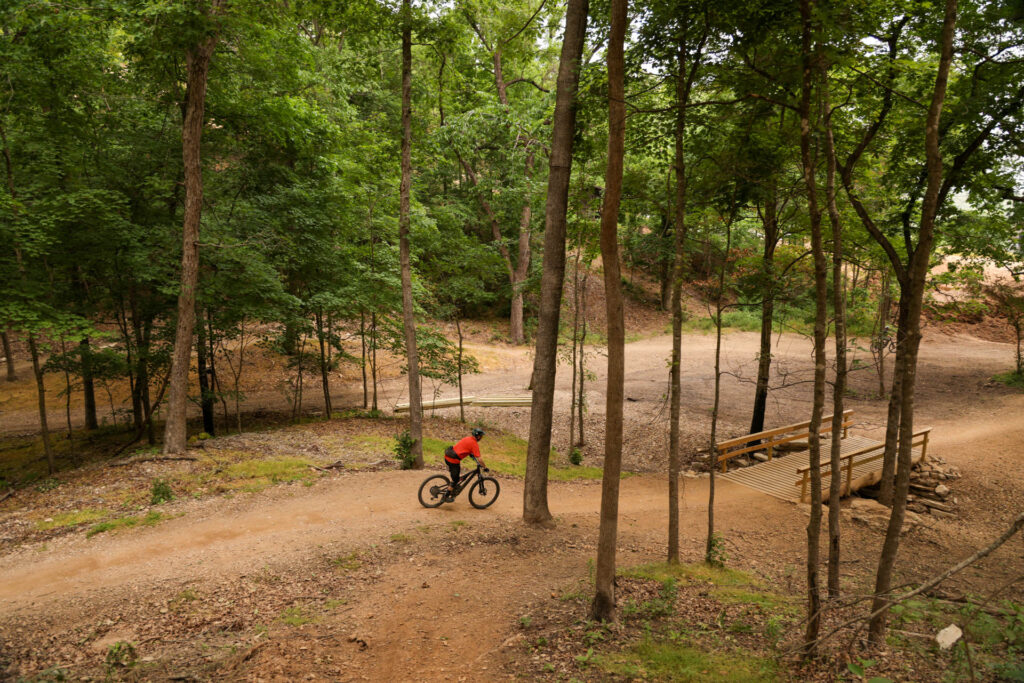
Bella Vista incorporated as a city in 2007. Over the following decades, the steep ridges and wooded corridors that had separated the old homesteads became the foundation for a trail network — more than 100 miles now, across the Back 40, Little Sugar, and Blowing Springs systems, with a direct link to the wider OZ Trails network and Bentonville. What had been barriers of terrain turned into connectors.
See it today: Pick any trailhead. The limestone bluffs along the Back 40 and the springs at Blowing Springs are the same features that drew the first summer visitors.
Timeline
Year | What happened |
|---|---|
1917 | Linebarger brothers open the summer resort on Lake Bella Vista |
1929 | Sunset Hotel completed atop the ridge |
1930s | Wonderland Cave nightclub era |
1950s–60s | John Cooper Sr. builds the planned community: seven lakes, golf courses, common property |
2007 | Bella Vista incorporates as a city |
Today | 100+ miles of trail across the same ridges |
Why it matters for a visitor
Bella Vista never abandoned its past; it adapted it. The resort’s springs are still on the trail map. The planned community’s lakes are where you’ll swim. The chapel’s design logic is why the trails hug the bluffs instead of cutting through them. Start at the Historical Museum on Highway 71 — volunteer-staffed, with artifacts from the Linebarger era and curated timelines — and the rest of town reads like a continuation of the exhibit.