Year-Round Riding in Bella Vista
- Biking Things to Do
bvguide
- October 18, 2026
- 0
- 15
- 6 minutes read
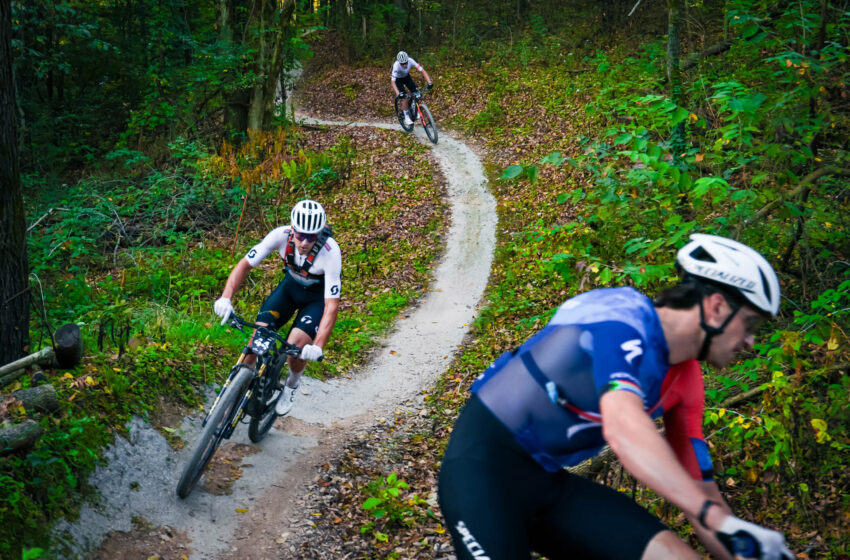
Trail conditions vary by season, system, and weather pattern, but generally riding or hiking is a year-round activity in the mid-south climate. The trick is knowing which system dries first.
Bella Vista’s location offers a year-round temperate climate for biking, hiking, golf, and water sports — a favorite of northern and Midwest-based visitors seeking to escape the cold and snow in winter months. But the three signature trail systems sit on different ground, and they don’t come back from rain at the same speed. Here’s how to read the conditions and pick your terrain.
48–72 hours: the clay-trail rule
Sections of the Back 40 often remain rideable sooner after rain, while clay-based trails in Blowing Springs and portions of Little Sugar may require 48–72 hours to dry fully. Riders are encouraged to confirm conditions before entering the system to prevent trail damage when wet or muddy. If a trail is leaving deep ruts, it’s too soft — pick another one.
Pick your terrain: three systems, one city
Rather than a single network, Bella Vista’s trails are organized into three main distinct systems, each with its own riding style and terrain profile. That variety allows riders to choose routes that match their technical preference, endurance goals, or time available — and the weather — all without leaving the city limits.
The Back 40 — 40 miles, technical. Located primarily on the east side of the city, the Back 40 is defined by technical terrain and extensive use of natural limestone features. Rock armoring, exposed stone, and narrow bench-cut sections are common throughout the system. The 21.7-mile outer loop provides a comprehensive tour of the area’s topography, while advanced segments such as The Ledges traverse narrow rock shelves above creek beds and require consistent line choice and focus. Because so much of it rides on rock, this is the first system to reopen after rain.
Little Sugar — about 50 miles, flow. The Little Sugar system emphasizes flow and sustained momentum. Spanning roughly 50 miles, its trails are engineered to manage elevation through long, consistent grades rather than repeated technical interruptions. Signature routes include the 25-mile Tunnel Vision Loop, which passes through the Highway 71 tunnel and connects to Tanyard Creek Falls. The system also contains the Huntley Gravity Zone, a concentrated downhill area designed for skill progression. Portions are clay-based; give them time after a storm.
Blowing Springs — 22 miles, connector. Blowing Springs serves as both a destination and a connector. Though smaller in total mileage, the system features a high density of geological elements, including limestone bluffs, caves, springs, and creek crossings. It also provides a critical link to regional trail systems extending south toward Bentonville. Due to higher clay content, trails in this area typically require longer drying times following rainfall.
Riding wet: the bottom line
System | Ground | After rain |
|---|---|---|
Back 40 | Limestone, rock armoring | Often rideable sooner |
Little Sugar | Mixed; portions clay | 48–72 hrs on clay sections |
Blowing Springs | Higher clay content | 48–72 hrs; longest drying time |
Be mechanically self-sufficient
Due to the length and dispersed nature of the trail network, riders should plan to be mechanically self-sufficient when riding extended loops, particularly in remote sections of the Back 40 and Little Sugar systems. Gear up with snacks, electrolytes, and tire or chain maintenance items on longer rides. Support services are concentrated near the city’s central corridor: Phat Tire operates a full retail shop in central Bella Vista offering repairs, parts, and bike rentals, and Bison Bikes maintains a retail and service location in the northern area of the city.
E-bikes and etiquette
Bella Vista’s terrain involves sustained climbing and significant elevation gains. Because of the challenging terrain, pedal-assist e-bikes are commonly used and accepted on the trail network and for gravity riding. Riders using e-bikes are asked to follow posted regulations and established trail etiquette, particularly on bi-directional trails where uphill traffic has the right of way.
The year-round case
Winter in Bella Vista is riding weather more often than not, and a dry stretch in January puts the Back 40 outer loop in play while trails up north are under snow. The systems you can’t ride on a given day are usually the ones that make the trip worth it two days later. For the durable routes to ride when it’s actively raining, see our wet-weather guide.